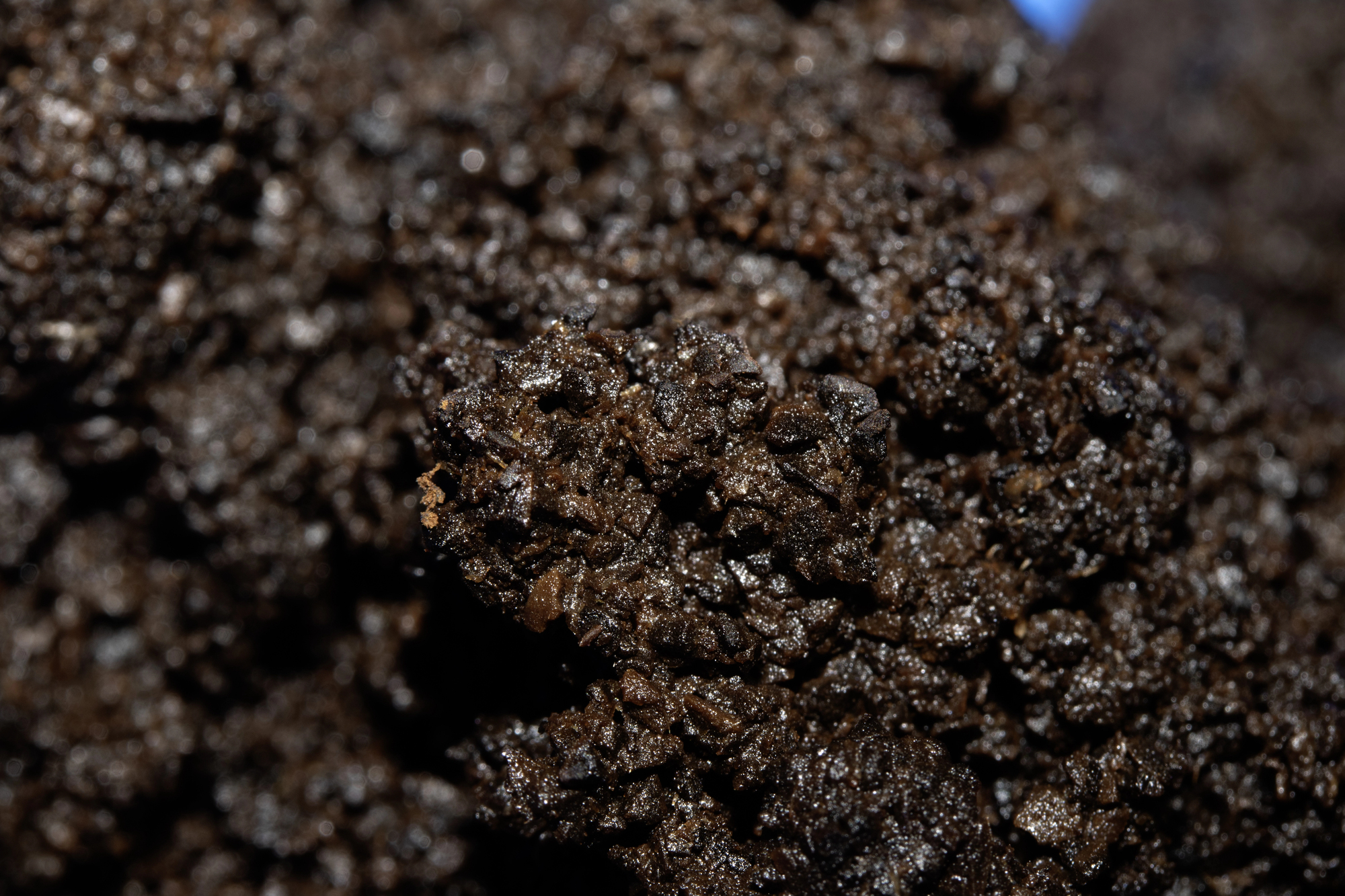
Researchers at the Korea Institute of Geoscience and Mineral Resources (KIGAM) have developed an innovative plasma-based method to convert wet coffee grounds into coal-grade biochar in under 90 seconds, eliminating the need for pre-drying. This breakthrough, detailed in the Chemical Engineering Journal, utilizes high-temperature plasma flames to directly process moisture-rich biomass, turning a previously challenging waste product into a valuable resource.
Historically, high moisture content has posed significant challenges in biomass energy recovery, with most conversion technologies requiring feedstocks to be dried beforehand. This drying process adds time, cost, and energy consumption to an already complex supply chain. Spent coffee grounds, known for their high moisture content, have been particularly problematic, often regarded as a waste product rather than a potential energy source.
KIGAM’s Flame Plasma Pyrolysis system employs plasma flames generated from liquefied petroleum gas and compressed air, reaching temperatures between 1,470 and 1,650 degrees Fahrenheit (800 to 900 degrees Celsius). At these temperatures, the moisture within the coffee grounds rapidly vaporizes, creating pressure that fractures the particles—a phenomenon researchers refer to as the “popcorn effect.” This process enhances the biomass’s structure, increases porosity, and accelerates carbonization, allowing for complete conversion in just 90 seconds.
The resulting biochar exhibits a heating value of 29.0 megajoules per kilogram, which is approximately 33 percent higher than untreated coffee grounds. The fixed carbon content significantly increases from 15.6 percent to 46.2 percent, while sulfur compounds are entirely removed, mitigating combustion emissions commonly associated with traditional coal. Additionally, the biochar’s specific surface area increases, making it suitable for applications beyond fuel, including activated carbon production, filtration, and industrial adsorption.
In comparison to established biomass processing methods, such as hydrothermal carbonization and torrefaction, KIGAM’s system stands out for its speed and efficiency. Hydrothermal carbonization can take one to six hours, while torrefaction requires at least 30 minutes. The Flame Plasma Pyrolysis process completes the conversion in 90 seconds, using combustion-generated plasma which helps reduce energy costs.
While the study primarily focused on spent coffee grounds, researchers believe the implications extend to other high-moisture organic materials, including food waste, sewage sludge, and agricultural residues. The KIGAM team argues that wet organic waste should be viewed as a valuable feedstock rather than a disposal issue, and they are planning commercial-scale tests with additional waste types in the future.
Check out the original article here: Source link