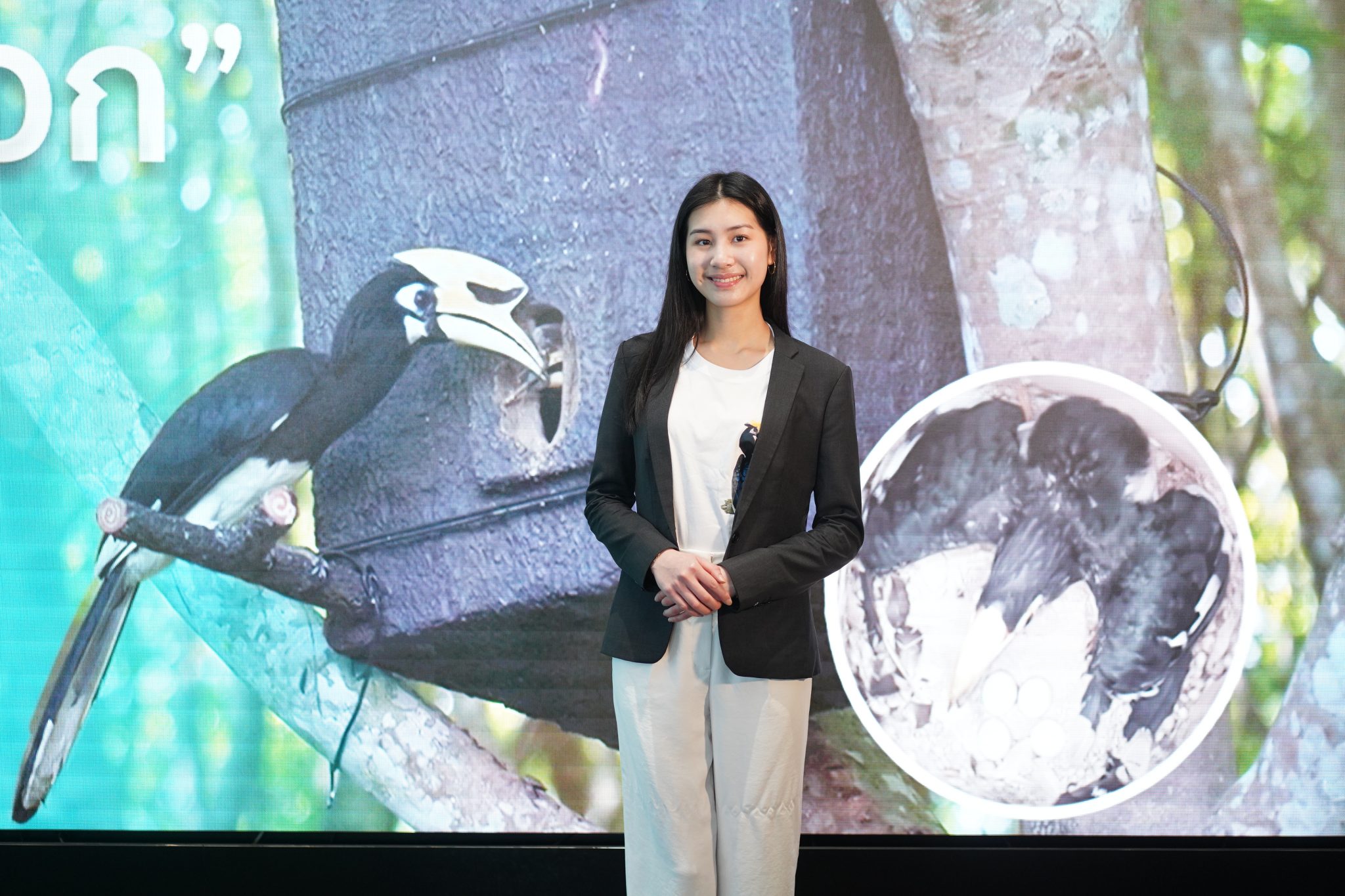
Image Credit: Yanin (Proud) Tangkaravakoon and presentation. Photos courtesy of The Earth Prize.
Three innovative projects from young environmentalists have emerged as part of the Earth Prize 2026 competition, showcasing solutions to pressing ecological issues across the globe.
In Thailand, 17-year-old Yanin Tangkaravakoon, known as Proud, has launched the “Homes for Hornbills” project to combat the decline of hornbill populations, which are essential for forest regeneration. The project focuses on creating artificial nests from upcycled plastic bottles to provide safe breeding sites for the birds. Alongside this, Proud’s initiative includes a school-based conservation program and alternative income sources for local communities to deter poaching. Currently, 20 nests have been installed in southern Thailand, with 14 hornbill chicks successfully fledging in 2025.
In Puerto Rico, Helena do Rego, also 17, is tackling the problem of excessive sargassum seaweed on beaches through her project, SargaTex PR. This initiative transforms the invasive seaweed into biofabric for short-use items, such as flip-flops and spa products. With Puerto Rico’s landfills nearing capacity, Helena’s approach not only addresses waste management but also creates biodegradable alternatives that are better for the environment. Funding from the Earth Prize will assist her in scaling production and collaborating with local businesses.
Brazilian teens Bernardo Renner and Ísís Valentin have developed HADA, a biodegradable bandage made from aloe vera and chamomile. This innovative dressing not only aids in wound healing but also decomposes within 48 hours, reducing plastic waste. With an estimated 2.2 billion plastic bandages discarded annually, HADA aims to improve both health outcomes and environmental impact. Their project has gained traction through research and partnerships with innovation hubs, with prize funding directed toward regulatory approvals and broader deployment.
The Earth Prize, founded during the 2019 School Strike for Climate, aims to empower students worldwide by funding environmentally focused projects. This year’s competition features seven regional winners, who will compete for a global title through public voting, which closes on May 29.
Check out the original article here: Source link