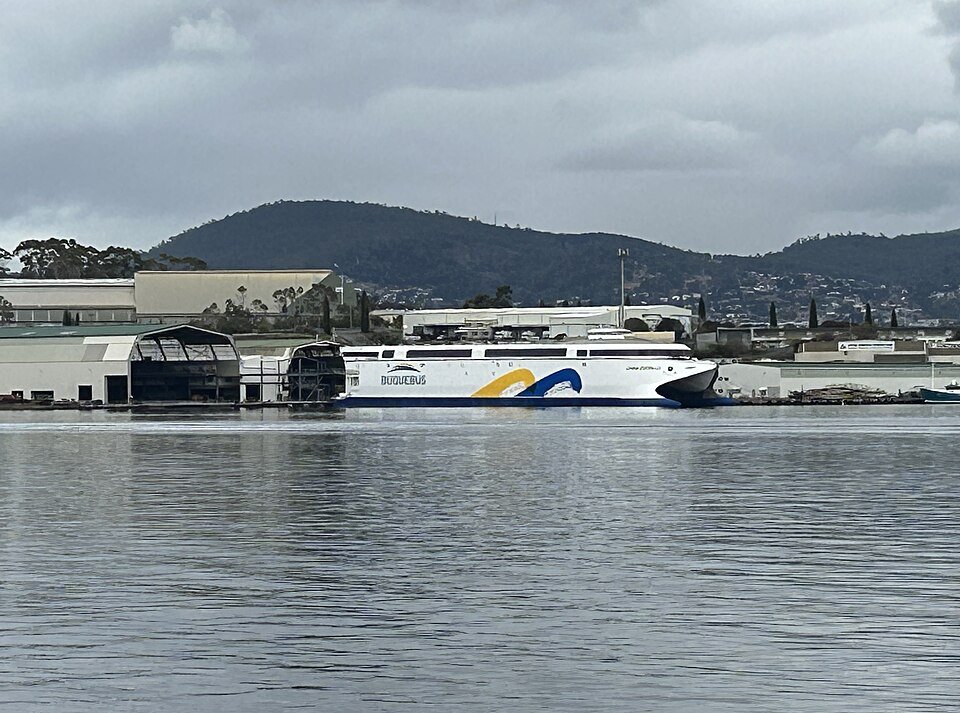
Image Credit: Chuq, CC BY-SA 4.0 , via Wikimedia Commons
A groundbreaking milestone in maritime transport was reached with the arrival of Hull 096, the largest electric vehicle ever constructed, surpassing all previous records for land and sea vessels. Built by Tasmanian shipbuilder Incat, this 130-meter (427-foot) battery-electric ferry recently completed a trans-Pacific journey to South American waters and is now en route to Colonia del Sacramento, Uruguay, for commissioning.
Originally commissioned as a diesel ferry in 2019 by the South American transport company Buquebus, the project underwent a significant redesign during the pandemic, ultimately shifting to a fully battery-electric propulsion system. This transformation has allowed Hull 096 to emerge as a pioneering example of sustainable maritime innovation.
The ferry is equipped with over 5,000 battery modules and constructed from lightweight aluminum, enhancing efficiency and operational capabilities. Once fully charged, it can operate for approximately 90 minutes, making it well-suited for its intended route across the Rio de la Plata, which connects Colonia del Sacramento to Buenos Aires in about one hour.
Named China Zorrilla after a prominent Uruguayan actress, the vessel has a passenger capacity of up to 2,100 and can accommodate 225 vehicles per crossing. Its construction involved hundreds of Tasmanian shipbuilders over several years, marking a significant achievement in the transition to cleaner maritime transport.
As the commissioning process begins in Uruguay, the ship will undergo system tests before entering regular service. Additionally, the success of Hull 096 has prompted other operators to explore electric ferry options, with Danish company Molslinjen placing orders for three more electric ferries from Incat, aimed at servicing one of northern Europe’s busiest ferry corridors. This development reflects a growing trend towards sustainable practices in the maritime industry.
Check out the original article here: Source link