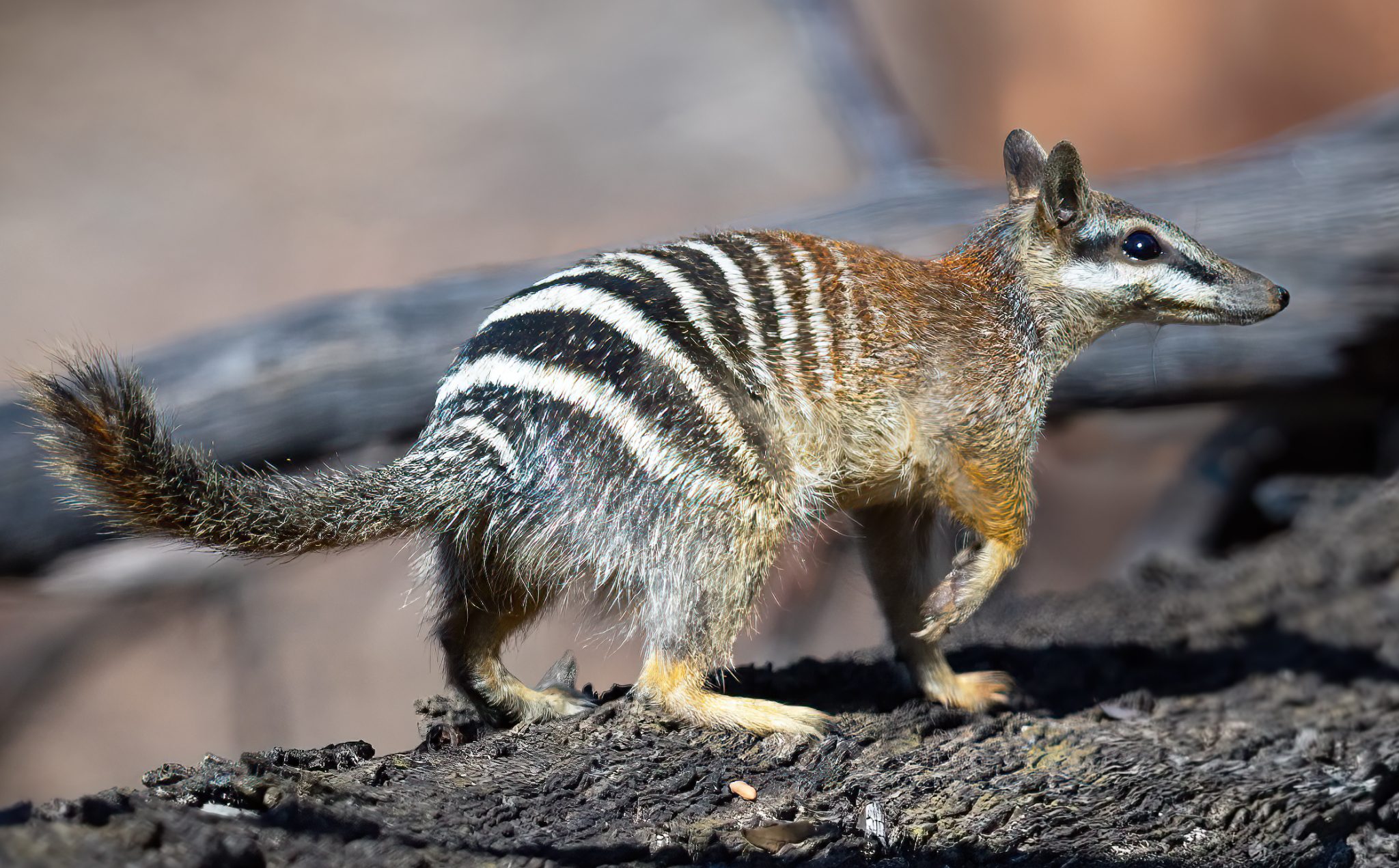
Image Credit: By JJ Harrison – Own work, CC BY-SA 4.0, https://commons.wikimedia.org/w/index.php?curid=179188696
The numbat, a small marsupial native to Western Australia, has been officially reclassified from endangered to near threatened by the International Union for Conservation of Nature (IUCN). This change marks a significant milestone in conservation efforts that have been underway for over 40 years.
Historically, the numbat population plummeted to approximately 300 individuals by the late 1970s due to predation by introduced species like red foxes and feral cats, alongside habitat loss and changing fire regimes. The risk of extinction loomed large during this period.
To combat these threats, wildlife conservation teams implemented a series of measures aimed at controlling introduced predators. Efforts included baiting and culling, which led to remarkable population rebounds in areas where these strategies were employed. One population has now grown to about 2,000 individuals.
Additionally, conservationists established predator-proof enclosures and relocated both wild-caught and zoo-bred numbats to new habitats. As a result, five distinct populations now exist across southern Australia, including three in Western Australia, one in South Australia, and one in New South Wales. The total numbat population is currently estimated to be between 2,000 and 3,000.
While this progress is commendable, ongoing conservation efforts remain critical. Experts emphasize that maintaining predator control is essential to ensure that the numbat does not revert to lower population levels or face extinction. Moreover, the geographic distribution of these populations is vital for their long-term survival, as it mitigates the risks associated with localized threats, such as droughts or disease outbreaks. Currently, conservation teams are focused on expanding both the populations and their range across the region.
Check out the original article here: Source link