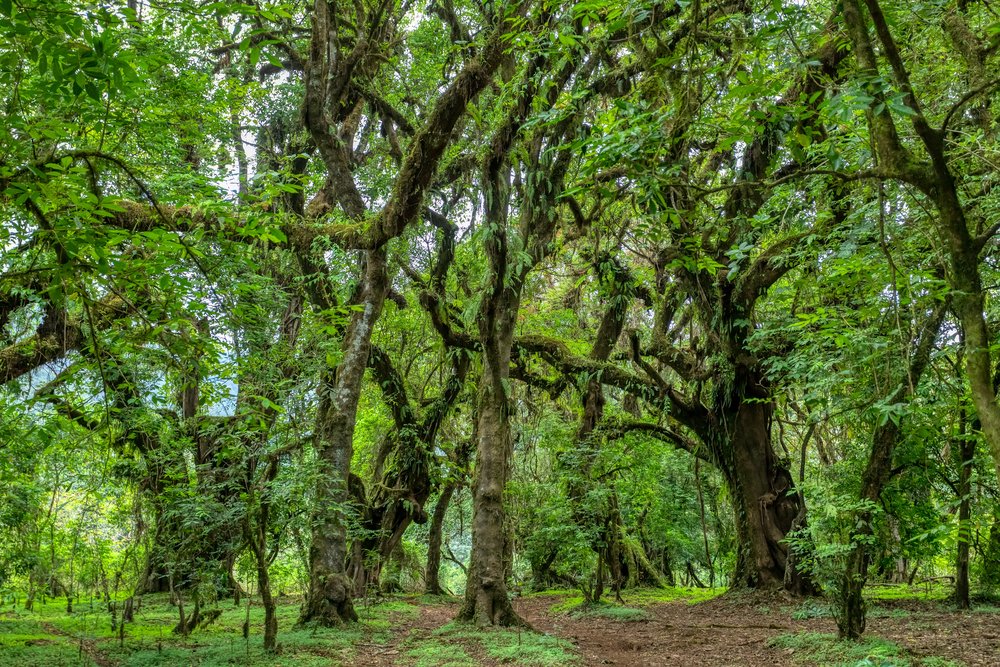
Image Credit: depositphotos.com
Ethiopia has seen a remarkable shift in its environmental landscape following the launch of the Green Legacy Initiative in 2019. After losing approximately 560,000 hectares of forest over the past century due to agricultural expansion, logging, and charcoal production, the initiative aims to reverse this trend by promoting extensive tree planting across the nation.
According to government reports, Ethiopia has planted an astonishing 48 billion trees in the last seven years, with a record of 353 million seedlings planted in just one day. The objective is to reach a total of 50 billion trees by 2030. However, the validity of these numbers has raised questions among researchers. While some studies indicate that many reforestation efforts face significant survival challenges, the Ethiopian government’s technical committee reported survival rates of 83% in 2019 and 79% in 2020. An independent assessment is currently underway to provide a clearer picture of these figures.
In the Berbere district of Oromia, local residents have actively engaged in the initiative, exemplified by Halima Kedir. Despite initial skepticism from her neighbors, Kedir has planted thousands of trees, significantly impacting her community’s perception of reforestation efforts. Her work, along with that of organizations like WaterAid Ethiopia, which has distributed about 55,000 indigenous seedlings in the area, has led to a reported 85% growth rate for these plants.
Ethiopia’s annual deforestation rate has decreased dramatically, dropping from 92,000 hectares in 2013 to approximately 27,703 hectares in 2023, a reduction of around 70%. Concurrently, forest cover has increased from 15.5% to 23.6% during the same period. While these statistics originate from government sources, they underscore a significant change in the country’s environmental practices.
In 2024, the Ethiopian parliament established the Green Legacy and Landscape Restoration Special Fund, allocating about $63 million to $140 million annually for the restoration of degraded land. This financial commitment highlights the government’s dedication to environmental sustainability.
Looking ahead, Ethiopia is set to host COP32, the 32nd UN climate summit, in November 2027, in recognition of its ongoing efforts in reforestation and community engagement. The initiative has catalyzed collaboration among local communities, universities, civil society, and government, fostering a unified approach to combat climate change and promote sustainable land management.
Check out the original article here: Source link