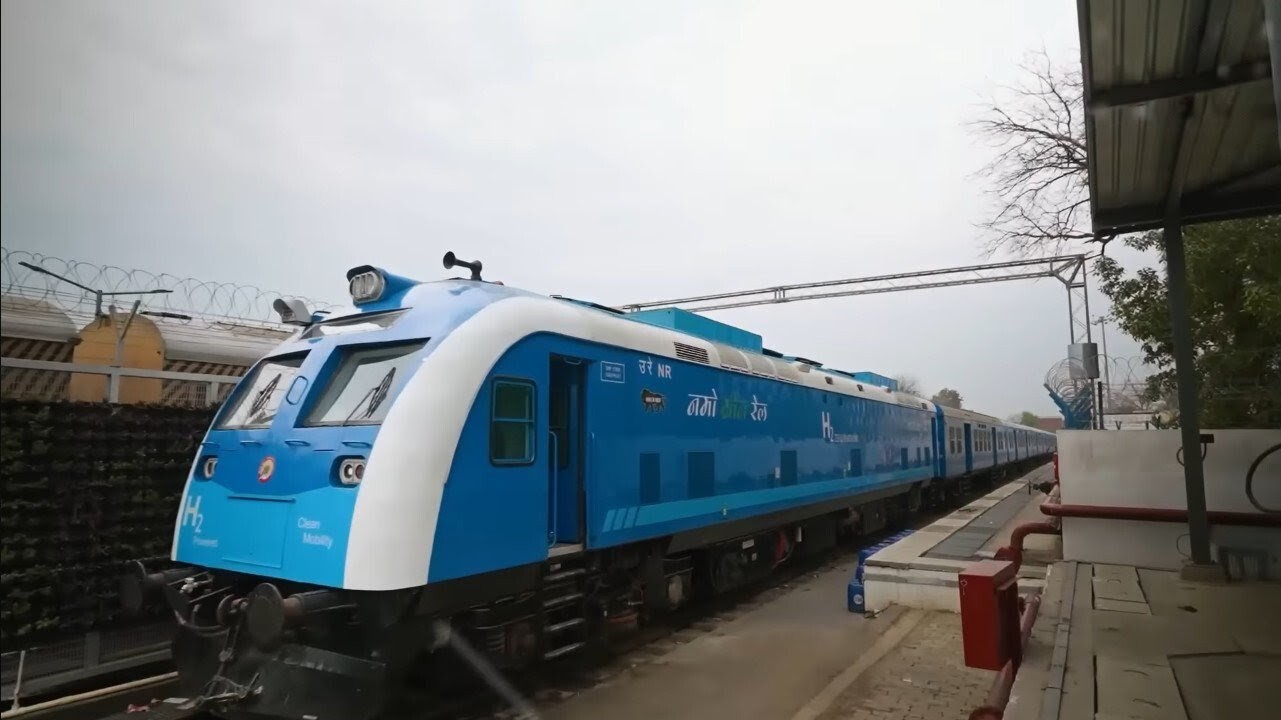
Image Credit: By Kshitij08 – Own work, CC0, https://commons.wikimedia.org/w/index.php?curid=195771866
India has made a significant advancement in sustainable transportation with the launch of its first hydrogen-powered train, which began operations in Haryana earlier this month. The train, named “NaMo Green Rail,” was inaugurated by Prime Minister Narendra Modi at the Jind railway station and is designed to promote self-reliance and sustainable development.
The NaMo Green Rail consists of two hydrogen-powered driving cars and eight passenger coaches, accommodating approximately 2,600 passengers. It has a top speed of 47 mph (75 kph). This initiative is part of India’s broader strategy to transition its vast rail network—one of the largest in the world—from diesel to cleaner energy alternatives. Currently, much of the rail network remains unelectrified, with diesel powering many routes. The hydrogen-powered train aims to replace diesel on these unelectrified lines without requiring full electrification.
Hydrogen fuel cells work by generating electricity through the reaction of hydrogen and oxygen, producing only water vapor as a byproduct. As part of the pilot program, the infrastructure for hydrogen storage and refueling is also being tested to assess the technology’s performance within India’s rail system.
India has set an ambitious target of achieving net-zero emissions by 2070, and the launch of the hydrogen train aligns with this goal. The initiative is part of a national effort to develop green hydrogen domestically, reduce carbon emissions from heavy transport, and lessen dependency on fuel imports. The ongoing pilot program will evaluate the feasibility of scaling this hydrogen technology across the country’s rail network.
Check out the original article here: Source link