Image Credit: paylessimages/123rf.com
This May offers a variety of celestial events for stargazers and astronomy enthusiasts, highlighted by the Eta Aquarids meteor shower, planetary alignments, and the occurrence of a rare blue moon.
The Eta Aquarids meteor shower, which runs from late April through late May, will reach its peak on the night of May 5 and 6. Known for their bright meteors and long glowing trails, the shower can produce dozens of visible meteors per hour under optimal conditions. Observers in the Southern Hemisphere are likely to enjoy better visibility, though those in the Northern Hemisphere can also catch the show. The best viewing time is during the pre-dawn hours when the moon is lower in the sky.
On May 12 and 13, a planetary alignment will be visible in the eastern sky just before sunrise. Mars, Saturn, and a crescent moon will form a nearly straight line above the horizon. By May 14, the moon will shift into a loose pyramid shape with the two planets, providing a striking sight for early risers.
May 16 is anticipated to be the darkest night of the month, as there will be no moonlight to obscure the stars. This presents an excellent opportunity for telescope observations, particularly for distant galaxies. The Milky Way’s core will be prominently visible, and celestial objects like the Whirlpool Galaxy and the Sombrero Galaxy can be observed near notable constellations.
On May 18, after sunset, stargazers can look west to see a conjunction of the crescent moon, Venus, Jupiter, and Mercury. The crescent moon and Venus will be particularly bright, making them easy to locate.
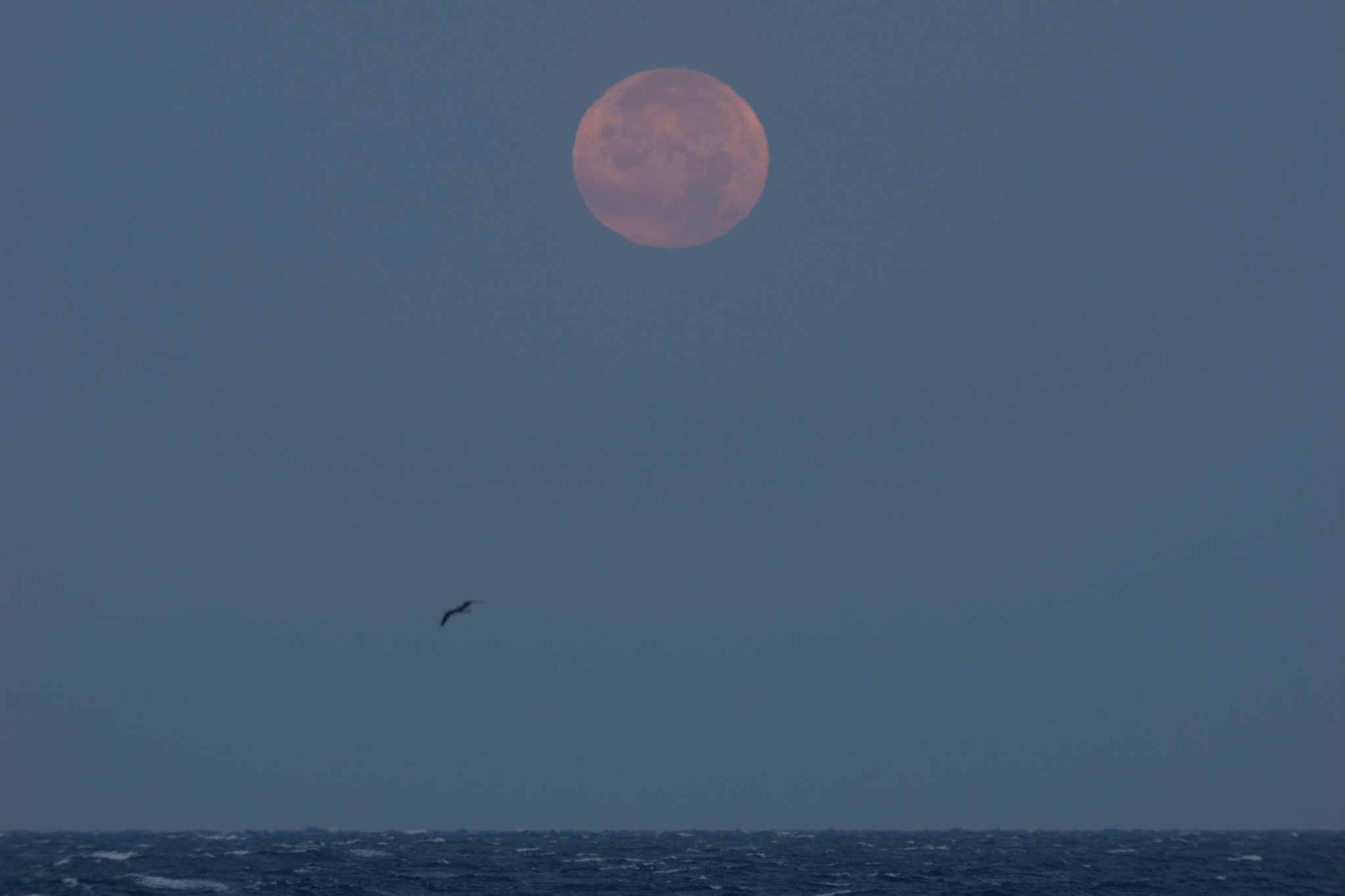
The month will culminate with a rare blue moon on May 31. While the moon will not actually appear blue, it will be the second full moon of the month, an event that occurs roughly every two to three years. Observers should note that the moon will appear larger and glow yellow or orange near the horizon due to atmospheric effects.
Throughout the month, Jupiter will serve as a prominent guide in the western sky, remaining near the Gemini stars Pollux and Castor. As May progresses, it will be easier to track the movement of Venus and Mercury, especially as they approach their greatest elongation in mid-June.
With these celestial events, May promises to be an exciting month for those interested in astronomy and stargazing.
Check out the original article here: Source link