Image Credit: By Aarni Salomaa – Own work, CC BY-SA 4.0, https://commons.wikimedia.org/w/index.php?curid=177733415
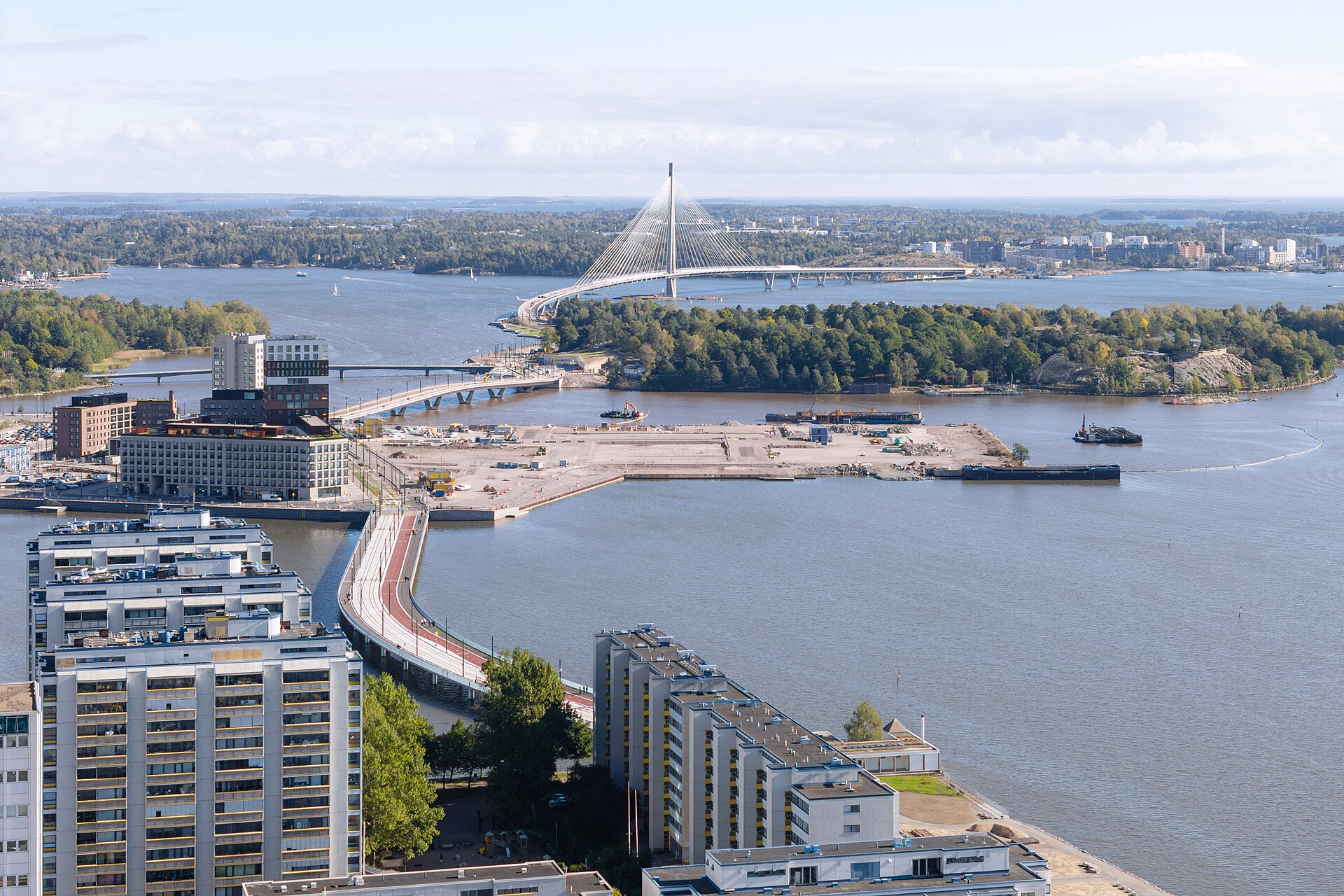
Helsinki has unveiled the Kruunuvuori Bridge, a new 0.74-mile connection between the city center and its growing eastern island suburbs. Opened to the public this past weekend, the bridge prioritizes pedestrians and cyclists, with plans to incorporate tram services beginning next year. Notably, cars and motorcycles will not be permitted on the bridge, reflecting the city’s commitment to sustainable urban mobility.
The Kruunuvuori Bridge is the final structure in a trio of Crown Bridges designed to enhance connectivity while preserving the natural environment of the surrounding islands. These areas are valued for their access to nature, and the bridge serves as a model of thoughtful urban planning that aims to maintain the quality of life for current and future residents.
Engineered by UK-based Knight Architects and WSP Finland, the bridge features a striking cable-stayed design anchored by a single pylon that rises 443 feet (135 meters) above the water. The structure’s curved form enhances the experience for users, allowing them to appreciate their surroundings as they traverse the span. Additionally, practical features such as wind-resistant railings and specialized cable coverings for ice management have been incorporated into the design.
Built to endure for 200 years, the bridge utilizes stainless steel and specially formulated concrete to combat corrosion and stress, ensuring longevity and minimal maintenance needs. The infrastructure is expected to accommodate the anticipated population growth in the Laajasalo district, which is set to double as new residential developments are introduced.
As the bridge also facilitates light rail transit, it aims to alleviate pressure on Helsinki’s metro system by distributing commuter traffic more evenly across the network. The Kruunuvuori Bridge stands out not only for its engineering and sustainability but also as a testament to the city’s vision for a more pedestrian-friendly urban environment.
Check out the original article here: Source link