Image Credit: remyelination/123rf.com
A recent doctoral thesis from the University of Helsinki has identified two promising drug candidates that may pave the way for new treatments in multiple sclerosis (MS). Conducted by Tapani Koppinen under the supervision of Associate Professor Merja Voutilainen, the research highlights the potential of these molecules to promote myelin regrowth and reduce neuroinflammation in models of the disease.
Multiple sclerosis affects roughly three million individuals globally, with the highest prevalence observed in Northern Europe and Canada. The condition arises when the immune system attacks myelin, the protective sheath surrounding nerve fibers. This attack disrupts signaling within the brain and spinal cord, leading to various neurological symptoms. While current treatments focus on suppressing the immune response, they do not repair the damage inflicted by the disease.
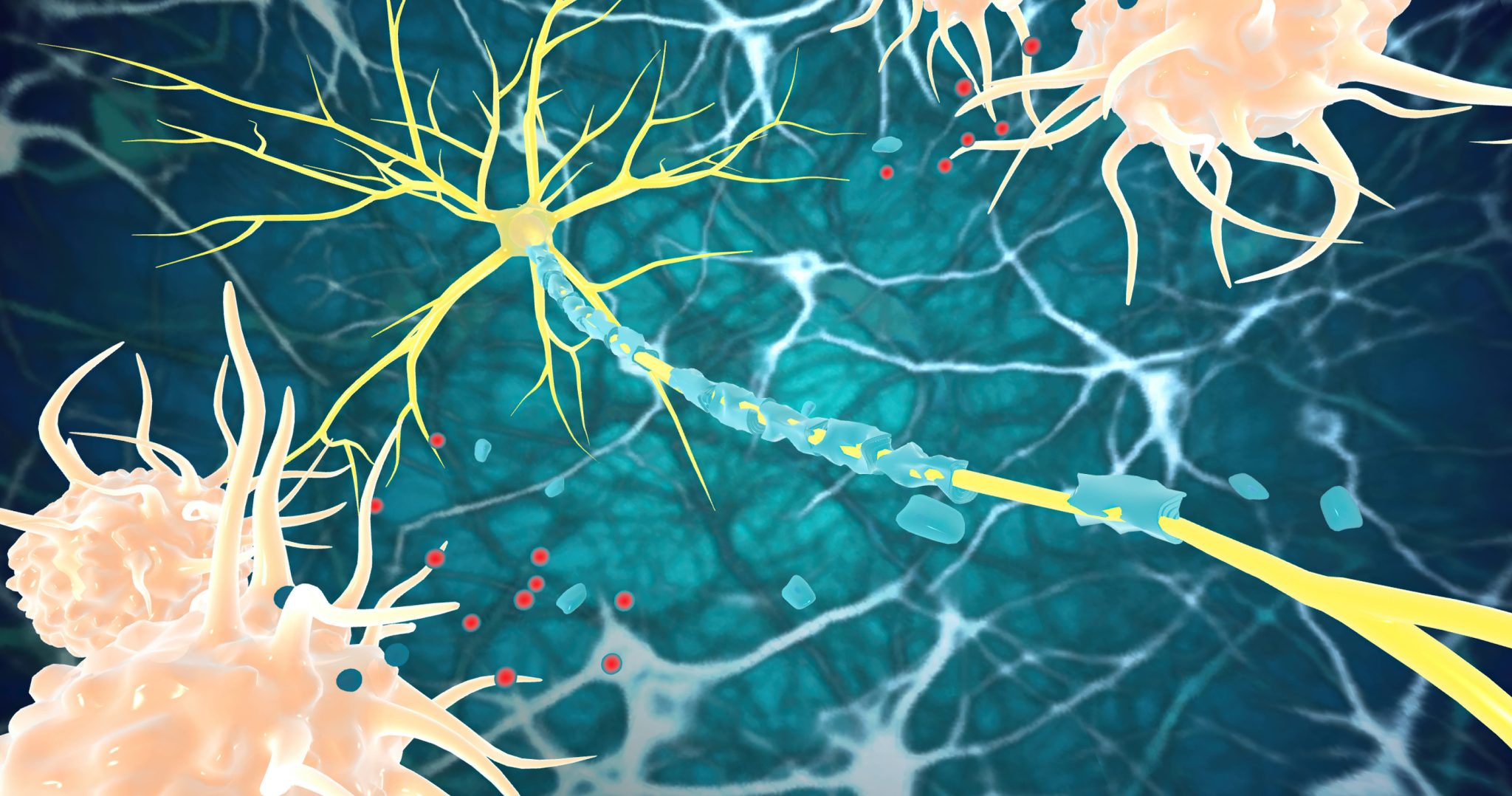
Remyelination, the process by which damaged myelin is regenerated, is crucial for restoring the insulation needed for efficient nerve signal transmission. In healthy individuals, this is an active repair mechanism. However, in MS patients, especially those with progressive forms of the disease, the ability to remyelinate diminishes over time due to the accumulation of damage and the formation of scar tissue.
Koppinen’s research explored two distinct mechanisms for enhancing remyelination. The first approach targets the unfolded protein response, a stress response that remains overactive in MS-affected tissues. By inhibiting this response, the new molecule was shown to increase and accelerate remyelination in laboratory models. The findings were published in *Molecular Therapy* in October 2025.
The second approach addresses the scar tissue that obstructs nerve repair. A separate molecule alters the composition of this scar, facilitating remyelination. This research was published in *Neuropharmacology* in November 2025. Both drug candidates demonstrated the ability to cross the blood-brain barrier in animal models, a significant hurdle in the development of effective treatments for neurological disorders.
Although these findings are promising, they are still in the preliminary stages of research. The next step involves advancing these candidates into clinical trials, where their efficacy in humans can be evaluated. While existing treatments for MS slow disease progression, no current therapies repair existing damage. This research marks a significant advancement in the quest for effective remyelination therapies for multiple sclerosis.
Check out the original article here: Source link