Image Credit: tommeaker/123rf.com
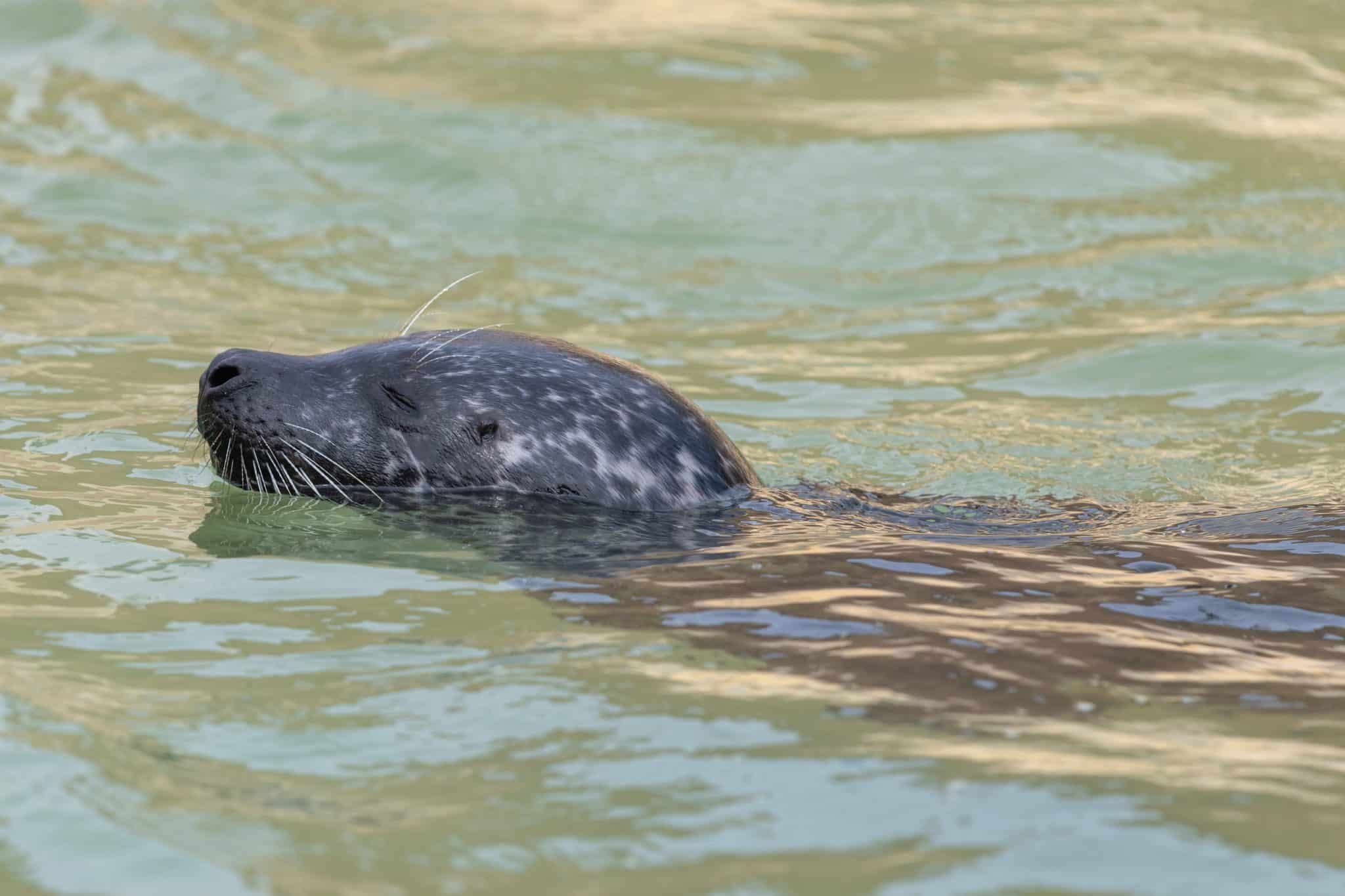
Harbor seals, known for their agility in the water, possess an extraordinary ability to track fish by sensing hydrodynamic trails left behind as the fish swim. This capability was highlighted in a recent study conducted by Yvonne Krüger, a biologist at the University of Rostock in Germany, who focused on the sensory mechanisms of these marine mammals.
The research centers on the roughly 100 specialized whiskers on a harbor seal’s face, which detect the subtle disturbances in water caused by moving fish. These sensory hairs allow the seals to navigate through dark or murky environments, effectively tracking their prey without relying solely on vision.
Rainbow trout, a common target for harbor seals, have developed evasive tactics to evade predators. They can bend into a C-shape, creating two opposing vortex rings in the water—one that conceals their true direction and another that acts as a decoy. This study sought to determine whether harbor seals could identify the correct vortex ring even when both were present.
Filou, an adult male harbor seal at a marine science center, was trained over nearly two years to distinguish between the two vortex rings. His successful performance demonstrated that seals can discern minute differences in size, which is critical for effective hunting. When his whiskers were covered, however, he was unable to complete the task, underscoring the importance of these sensory structures.
The findings, published in the Journal of Experimental Biology, suggest that harbor seals can effectively “read” the hydrodynamic trails of fish, enabling them to hunt in conditions where visibility is compromised, such as at night or in murky waters. This research not only enhances understanding of harbor seal behavior but also has implications for conservation, as changing environmental conditions could disrupt the signals seals rely on for hunting.
Additionally, the mechanics of how seals utilize their whiskers may inform the design of underwater sensors for various applications, including archaeological surveys and biological monitoring. This study reveals that the ocean is far from a silent expanse; instead, it is rich with information that harbor seals have been adept at interpreting for generations.
Check out the original article here: Source link