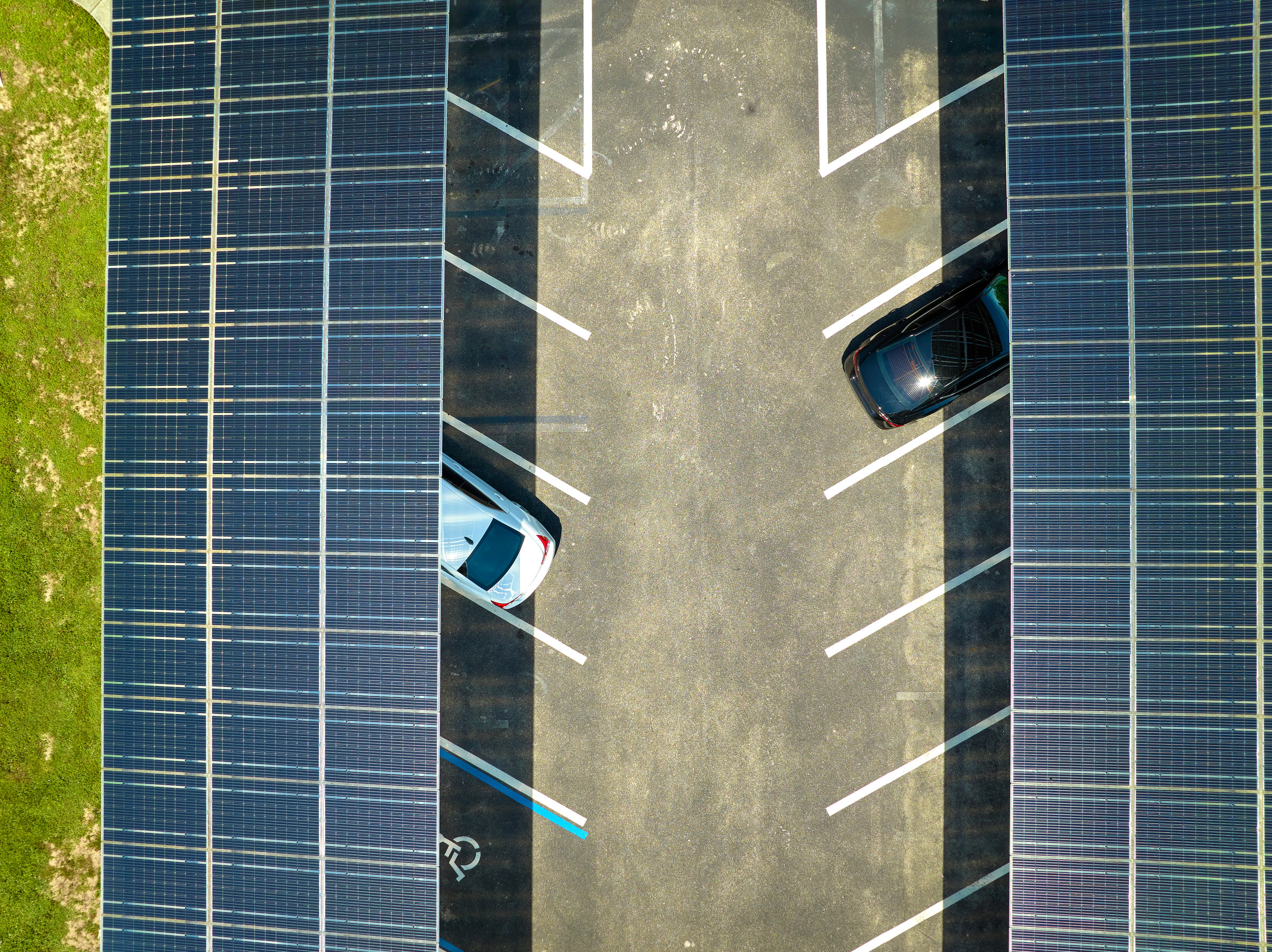
Image Credit: bilanol/123rf.com
Starting this month, South Korea is implementing a groundbreaking initiative that will require all parking lots with more than 80 spaces to install solar canopies or carports. This new regulation applies to both new and existing parking facilities, marking a significant step in the country’s commitment to renewable energy and sustainable land use.
The initiative is part of an amendment to South Korea’s Act on the Promotion of the Development, Use, and Diffusion of New and Renewable Energy. The primary objectives are to enhance access to renewable energy, create jobs in solar installation and construction, and utilize land that would otherwise remain underused. With parking lots present in nearly every community, the government views these spaces as ideal locations for quickly scaling up solar energy infrastructure.
In addition to contributing to the renewable energy grid, installing solar canopies provides practical benefits for drivers. These shaded structures help keep vehicles cooler during the summer months, protect them from adverse weather conditions, and reduce wear on car interiors. For electric vehicles and plug-in hybrids, cooler car interiors can translate to less energy consumption on air conditioning, thereby preserving battery range. Furthermore, many solar canopies can be integrated with electric vehicle (EV) chargers, effectively transforming parking spots into convenient fueling stations.
The law, approved in late September, is expected to take effect this month, paving the way for new installation projects across the country. This initiative is not only a South Korean effort; similar projects have begun to emerge globally. For instance, Arizona’s Northwest Fire District has partnered with Standard Solar to create a solar carport system capable of producing over 1.23 million kilowatt-hours of clean energy annually. In New York, a recent initiative has opened up additional commercial zoning for EV charging and parking-lot-based solar developments.
The concept of converting parking lots into solar-generating spaces is gaining traction in sun-rich regions like Texas, Florida, and New Mexico. Even smaller-scale projects, such as installing canopies in school or municipal parking lots, can significantly reduce community energy costs while enhancing local solar capacity.
South Korea’s approach illustrates that innovative climate solutions do not necessarily require new land or technology. By reimagining existing spaces, the country is not only advancing its renewable energy goals but also providing daily comfort and savings for its citizens. As more regions explore similar initiatives, solar parking lots may increasingly become a common feature, contributing to a cleaner and more sustainable future.
Check out the original article here: Source link