Image Credit: Luisovalles, CC BY-SA 3.0 , via Wikimedia Commons
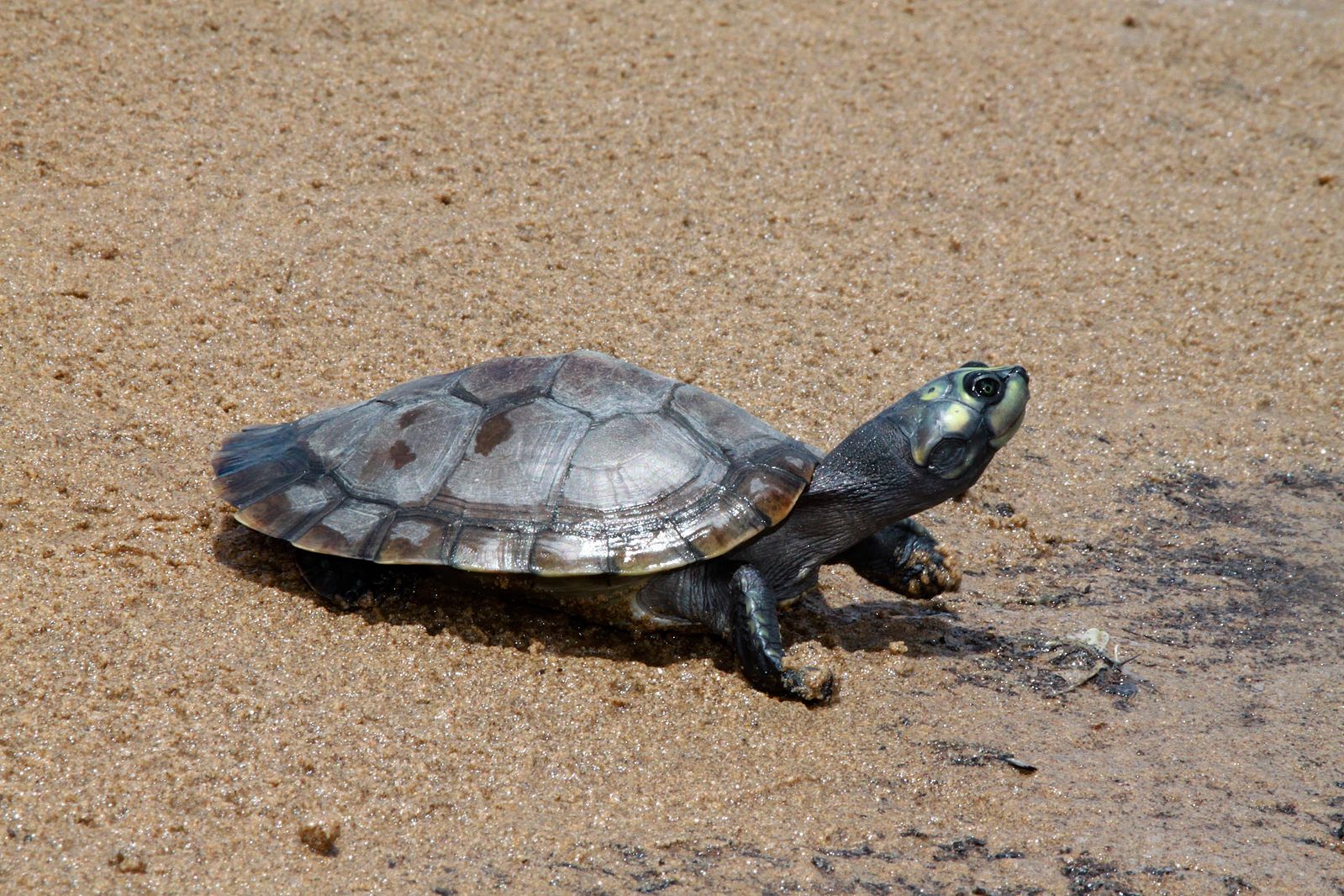
In a significant breakthrough for wildlife conservation, scientists have identified the largest known nesting site of the endangered giant South American river turtle, or Arrau turtle, along the Guaporé River, which forms the border between Brazil and Bolivia. A recent study conducted by researchers from the University of Florida and the Wildlife Conservation Society utilized advanced drone technology to document over 41,000 turtles at this extraordinary site.
The study, published in the Journal of Applied Ecology, marks a critical advancement in wildlife monitoring techniques. By combining drone imagery with sophisticated statistical modeling, the researchers established a more precise and non-invasive method for counting animal populations in their natural habitats. This innovative approach is vital for understanding the status of Arrau turtle populations, which face ongoing threats from poaching and habitat loss despite existing legal protections.
Arrau turtles, known for their social behavior and impressive size—growing up to 90 centimeters in length and weighing as much as 80 kilograms—gather in large numbers to nest each dry season, typically between July and August. However, accurately assessing their populations has posed challenges for conservationists, as traditional ground surveys have often resulted in inconsistent and invasive estimates.
To overcome these challenges, the research team conducted extensive drone surveys over a span of 12 days, capturing approximately 1,500 high-resolution images per flight. Using these images, they created detailed orthomosaics that allowed them to track the activities of marked turtles, ultimately leading to a refined population estimate of just over 41,000 individuals. This figure significantly contrasts with earlier counts, which varied widely between 16,000 and nearly 79,000 turtles.
The implications of this research extend beyond just counting turtles. Arrau turtles play a crucial role in the Amazon ecosystem, acting as seed dispersers and serving as a food source for various predators. Accurate population data is essential for targeted conservation efforts, enabling stakeholders to protect vital nesting areas and allocate resources effectively.
Looking forward, the researchers aim to apply their drone-based methodology across other regions of the Amazon, including Colombia, Peru, and Venezuela. This approach not only promises to enhance the understanding of Arrau turtle populations but also holds potential for monitoring other elusive wildlife species.
This study exemplifies how technology and scientific innovation can foster significant advancements in environmental conservation, providing a clearer pathway for protecting vital species and ecosystems in the face of ongoing environmental challenges.
Check out the original article here: Source link